

CFPF Paper Soup Cup Sourcing Guide by LvSheng with Flexible Printing and Cup Forming
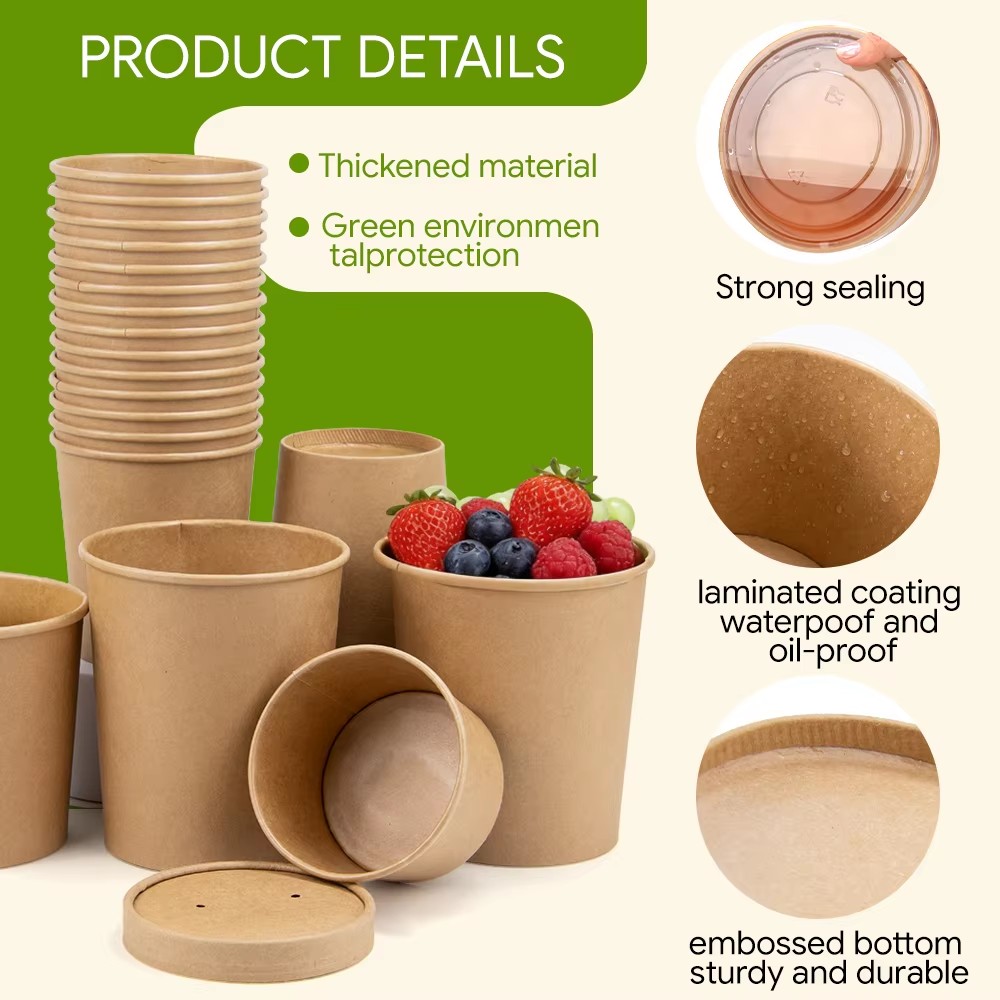

CFPF Paper Soup Cup Sourcing Priorities
When evaluating potential suppliers at major industry trade events like CFPF, procurement managers must look for clear evidence of integrated manufacturing capabilities rather than just a diverse product showcase. A dependable manufacturer does not simply assemble disparate components; they control the entire production workflow from raw material preparation to final product inspection. For foodservice buyers, the primary priority is verifying that the supplier possesses comprehensive in-house expertise encompassing die cutting, coating, printing, and forming.
This integrated approach significantly reduces the risk of quality variations across different production runs and ensures that custom branding and structural requirements can be executed accurately. Assessing a supplier’s foundational production infrastructure, such as the sophistication of their forming machinery and the strictness of their quality testing protocols, provides a much stronger foundation for long-term commercial partnerships than merely relying on the appearance of exhibition samples. Buyers should actively question suppliers about their workflow coordination and how they manage transitions between different manufacturing stages to maintain strict quality standards.
Matching Soup Cup Construction to Hot, Cold, and Takeaway Uses
The practical performance of a paper soup container depends entirely on its structural construction and how precisely it matches the intended menu application. Foodservice menus are highly diverse, ranging from steaming broths, hearty stews, and hot soups to chilled desserts like ice cream and frozen yogurt. Each specific application demands tailored barrier properties and structural resilience.
When discussing requirements with a supplier, buyers must clarify the exact service conditions the packaging will face. A container designed for hot takeaway delivery must feature robust board grades capable of withstanding elevated temperatures without losing its structural integrity or becoming uncomfortable to handle. Conversely, packaging intended for frozen treats requires enhanced moisture resistance to prevent exterior condensation from weakening the cup walls over time. A capable packaging manufacturer will actively assist buyers in specifying the most appropriate base materials and protective layers to ensure the container performs reliably across its entire intended temperature range, safeguarding both the food product and the end-user experience.
Flexible Printing and Artwork Planning for Custom Branding
Visual presentation remains a critical component of modern foodservice packaging, effectively transforming a functional container into a mobile brand touchpoint. For custom printed hot soup bowls and takeaway cups, the printing process must consistently deliver sharp, vibrant artwork while strictly maintaining all food-grade safety standards. Flexible printing and advanced offset printing techniques are central to achieving these high-quality visual results on paperboard substrates.
When planning custom branding initiatives, buyers should proactively verify the supplier’s prepress capabilities, including specific artwork format requirements, color limitations, and proofing procedures. Discussing these technical parameters early in the sourcing process prevents costly delays and ensures the final manufactured product aligns perfectly with corporate brand guidelines. A supplier with fully integrated printing and die-cutting capabilities can better control the precise alignment and finish of the custom design, resulting in a highly professional and consistent appearance for every single unit rolling off the production line.
Cup Forming and Coating as Production Control Points
The fundamental structural integrity of a paper soup cup is established during the highly sensitive coating and forming stages. These are the critical control points where flat raw materials are physically transformed into secure, functional packaging. Xiamen LvSheng Paper & Plastic Products Co., Ltd. demonstrates this essential process through their one-stop manufacturing sequence, which seamlessly encompasses product design, die cutting, protective coating, and final high-speed forming.
The precise application of protective coatings is absolutely essential for creating the barrier needed to hold hot liquids securely without seepage. During the subsequent forming process, precision machinery must accurately shape and seal the coated board to prevent weak seams or misaligned edges. Buyers should prioritize engaging with suppliers who can clearly demonstrate tight, systematic control over these specific stages, as variations in coating thickness or inconsistent forming pressure are the most common root causes of product failure in commercial foodservice settings.
Grease Resistance, Water Resistance, and Lid Fit for Transport
Modern takeaway and food delivery operations place immense physical stress on packaging, making grease resistance and water repellency non-negotiable baseline features for any commercial soup container. If the internal barrier layer fails, the paperboard will rapidly absorb moisture or heavy oils, leading to a compromised physical structure and a high potential for damaging leaks.
Equally important to the cup's barrier properties is the mechanical interaction between the cup rim and the accompanying lid. A tight, secure lid fit is vital for preventing spills during unpredictable transport conditions. Buyers must rigorously evaluate how the manufacturer controls the dimensional tolerances of the cup rim to ensure flawless compatibility with corresponding lids. A reliable supplier will design, engineer, and manufacture the cup and the lid as a unified, cohesive system, minimizing the risk of mismatch and ensuring a secure, interlocking seal that withstands the unique rigors of third-party delivery networks.
Waterproof Testing and Dimensional Inspection for Consistent Supply
Quality assurance programs must extend far beyond basic visual checks to include rigorous, standardized functional testing. To guarantee a consistent and reliable supply, a packaging manufacturer must implement strict inspection protocols directly on the production floor. As demonstrated in the operational practices of LvSheng, effective quality control involves continuous waterproof testing and precise dimensional inspection throughout the manufacturing shift.
Waterproof testing systematically verifies the absolute integrity of both the internal coating and the structural seams, ensuring the cups can hold demanding liquids for extended periods without any sign of leaking. Simultaneously, dimensional inspection confirms that the height, overall diameter, and rim specifications remain strictly within acceptable manufacturing tolerances. This exactness is critical for smooth operation on automated filling lines and for ensuring reliable lid fit across different production batches. Buyers should always ask potential suppliers to detail their specific testing methodologies and inspection frequencies to ensure every delivered batch meets the necessary performance standards.
CFPF Supplier Meeting Questions and Follow Up RFQ Requirements
To maximize the strategic value of supplier meetings at the CFPF exhibition, procurement professionals must arrive prepared with a highly structured inquiry framework. Moving beyond initial corporate introductions, on-site discussions should focus heavily on concrete production parameters and technical capabilities. Buyers should request detailed specifications regarding available board grades, specific coating options, and the complete size matrix for the supplier's soup container portfolio.
It is also essential to clearly establish the manufacturer's operational constraints, such as minimum order quantities, expected lead times for both initial samples and full mass production runs, and their accepted international delivery terms. Following a productive meeting, a comprehensive Request for Quotation should be submitted, formally requiring the supplier to provide precise product mapping, detailed documentation of their quality management systems, and final confirmation of their custom printing and cup forming capabilities. Structuring the sourcing process around these specific technical and operational details ensures a successful, risk-mitigated procurement outcome for the buying organization.
For further detailed information on securing high-performance foodservice packaging and exploring custom soup cup manufacturing solutions, visit the official website of Xiamen LvSheng Paper & Plastic Products Co., Ltd. at https://lvshengpapercup.com/.
Xiamen LvSheng Paper & Plastic Products Co., Ltd.
LvSheng
email us here
Visit us on social media:
LinkedIn
Facebook
YouTube
X
Legal Disclaimer:
EIN Presswire provides this news content "as is" without warranty of any kind. We do not accept any responsibility or liability for the accuracy, content, images, videos, licenses, completeness, legality, or reliability of the information contained in this article. If you have any complaints or copyright issues related to this article, kindly contact the author above.
