

Frozen Seafood Market 2026 expanding with demand for convenient protein-rich diets
frozen seafood market forecast
frozen seafood market growth

frozen seafood market analysis
The Business Research Company's Frozen Seafood Market 2026 expanding with demand for convenient protein-rich diets
LONDON, GREATER LONDON, UNITED KINGDOM, March 24, 2026 /EINPresswire.com/ -- "Frozen Seafood market to surpass $33 billion in 2030. In comparison, the Seafood market, which is considered as its parent market, is expected to be approximately $363 billion by 2030, with Frozen Seafood to represent around 9% of the parent market. Within the broader Food And Beverages industry, which is expected to be $9,315 billion by 2030, the Frozen Seafood market is estimated to account for nearly 0.4% of the total market value.
Which Will Be the Biggest Region In The Frozen Seafood Market In 2030
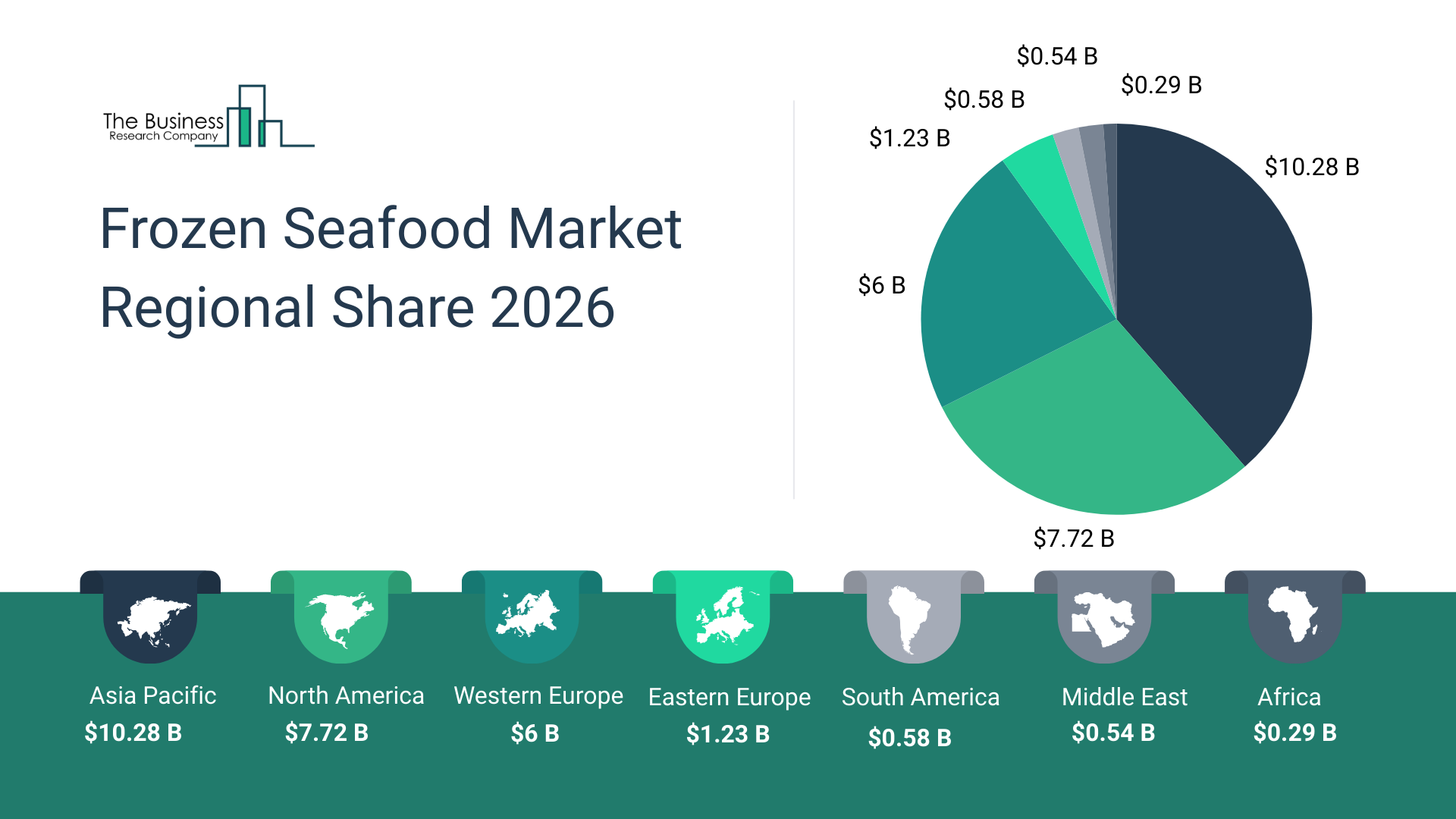
Asia-Pacific will be the largest region in the frozen seafood market in 2030, valued at $13 billion. The market is expected to grow from $10 billion in 2025 at a compound annual growth rate (CAGR) of 6%. The strong growth can be attributed to increasing seafood consumption driven by rising population and urbanization, strong aquaculture and fishing industries across major coastal economies, expanding cold storage and logistics infrastructure supporting seafood preservation, increasing seafood exports from regional producers to global markets, rising investments in seafood processing and packaging technologies, and growing demand for marine-based protein sources across countries such as China, Japan, and India.
Which Will Be The Largest Country In The Global Frozen Seafood Market In 2030?
The USA will be the largest country in the frozen seafood market in 2030, valued at $7 billion. The market is expected to grow from $6 billion in 2025 at a compound annual growth rate (CAGR) of 6%. The strong growth can be attributed to rising consumer demand for convenient seafood products, increasing preference for healthy and protein-rich diets, strong presence of major seafood processing and distribution companies, expanding cold chain and retail infrastructure, growth of e-commerce and direct-to-consumer seafood sales, and strict food safety and quality standards across the country.
Request A Free Sample Of The Frozen Seafood Market Report
https://www.thebusinessresearchcompany.com/sample_request?id=8764&type=smp&utm_source=EINPresswire&utm_medium=Paid&utm_campaign=Mar_PR
What Will Be Largest Segment In The Frozen Seafood Market In 2030?
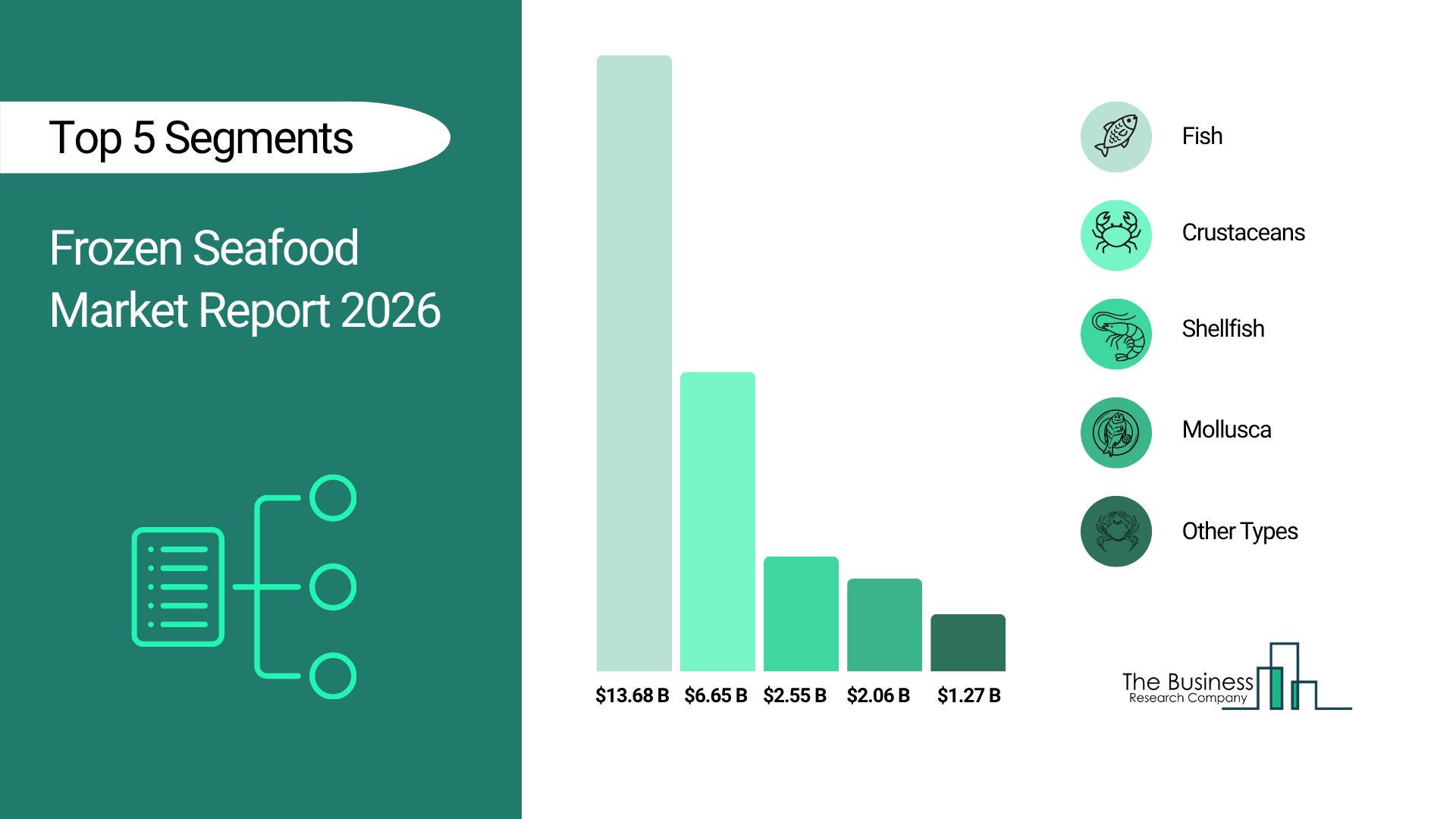
The frozen seafood market is segmented by category into fish, crustaceans, shellfish, mollusca, and other types. The fish market will be the largest segment of the frozen seafood market segmented by category, accounting for 52% or $17 billion of the total in 2030. The fish market will be supported by the increasing consumer preference for convenient and ready-to-cook seafood, rising awareness of health benefits associated with fish consumption, strong supply chain and cold storage infrastructure, expanding retail channels, growth of sustainable and responsibly sourced seafood, and continuous innovation in frozen fish products and packaging solutions.
The frozen seafood market is segmented by nature into organic, and conventional.
The frozen seafood market is segmented by distribution channel into business-to-business (B2B), and business-to-consumer (B2C).
The frozen seafood market is segmented by end user into food processing industry, food service provider, and retail and household.
What Is The Expected CAGR For The Frozen Seafood Market Leading Up To 2030?
The expected CAGR for the frozen seafood market leading up to 2030 is 6%.
What Will Be The Growth Driving Factors In The Global Frozen Seafood Market In The Forecast Period?
The rapid growth of the global frozen seafood market leading up to 2030 will be driven by the following key factors that are expected to reshape seafood supply chains, enhance cold storage standards, strengthen quality assurance practices, and drive innovation across diverse segments of the global frozen food ecosystems.
Rising Global Demand for Convenient and Ready-to-Cook Seafood - The rising global demand for convenient and ready-to-cook seafood is expected to become a key growth driver for the frozen seafood market by 2030. The growing consumer preference for convenient, ready-to-cook, and easy-to-store seafood products is a key driver for the frozen seafood market. Busy lifestyles and increasing urbanization are pushing consumers to opt for frozen fish, shrimp, shellfish, and other seafood products that require minimal preparation while maintaining high nutritional value. Frozen seafood ensures year-round availability of seasonal species and preserves freshness, texture, and flavor, making it appealing for households, restaurants, and food service providers. This trend is further supported by the proliferation of retail chains, supermarkets, and online grocery platforms offering diverse frozen seafood options. As a result, the rising global demand for convenient and ready-to-cook seafood is anticipated to contribute to 3.0% annual growth in the market.
Expansion of Cold Chain Infrastructure and Logistics - The expansion of cold chain infrastructure and logistics is expected to emerge as a major factor driving the expansion of the frozen seafood market by 2030. The development of advanced cold chain systems and logistics networks is enabling efficient storage, transportation, and distribution of frozen seafood. Modern refrigeration and freezing technologies, combined with refrigerated transport and storage facilities, ensure that seafood products reach end-users without quality deterioration or spoilage. The expansion of cold chain infrastructure, particularly in emerging markets, is driving market growth by improving access to frozen seafood in regions with limited local seafood production. This also allows exporters to ship products globally while maintaining freshness and compliance with international quality standards. Consequently, the expansion of cold chain infrastructure and logistics is projected to contribute to around 2.9% annual growth in the market.
Increasing Health Awareness and Nutritional Preferences - The increasing health awareness and nutritional preferences are expected to act as a key growth catalyst for the frozen seafood market by 2030. Seafood is recognized as a rich source of high-quality protein, omega-3 fatty acids, and essential micronutrients, driving its consumption among health-conscious consumers. Frozen seafood provides the same nutritional benefits as fresh seafood while offering convenience and longer shelf life. Rising awareness of heart health, brain function, and overall wellness is encouraging consumers to include seafood in their regular diet, boosting demand for frozen products. Additionally, dietary trends such as keto, paleo, and high-protein diets are increasing preference for seafood as a key protein source, further supporting market growth. Therefore, the increasing health awareness and nutritional preferences are projected to contribute to approximately 2.8% annual growth in the market.
Access The Detailed Frozen Seafood Market Report Here
https://www.thebusinessresearchcompany.com/report/frozen-seafood-global-market-report?utm_source=EINPresswire&utm_medium=Paid&utm_campaign=Mar_PR
What Are The Key Growth Opportunities In The Frozen Seafood Market In 2030?
The most significant growth opportunities are anticipated in the fish market, the crustaceans market, the shellfish market, the mollusca market, and the other types market. Collectively, these segments are projected to contribute over $8 billion in market value by 2030, driven by rising consumer demand for convenient and nutritious seafood products, increasing preference for protein-rich and healthy diets, expanding cold chain and frozen storage infrastructure, emphasis on sustainable and responsibly sourced seafood, and continuous product innovation in frozen seafood offerings. This surge reflects the accelerating focus on food quality, safety, and convenience, fuelling transformative growth within the broader frozen seafood and processed food industry.
The fish market is projected to grow by $4 billion, the crustaceans market by $2 billion, the shellfish market by $1 billion, the mollusca market by $1 billion, and the other types market by $0.3 billion over the next five years from 2025 to 2030.
Learn More About The Business Research Company
The Business Research Company (www.thebusinessresearchcompany.com) is a leading market intelligence firm renowned for its expertise in company, market, and consumer research. We have published over 17,500 reports across 27 industries and 60+ geographies. Our research is powered by 1,500,000 datasets, extensive secondary research, and exclusive insights from interviews with industry leaders.
We provide continuous and custom research services, offering a range of specialized packages tailored to your needs, including Market Entry Research Package, Competitor Tracking Package, Supplier & Distributor Package and much more.
Disclaimer: Please note that the findings, conclusions and recommendations that TBRC Business Research Pvt Ltd delivers are based on information gathered in good faith from both primary and secondary sources, whose accuracy we are not always in a position to guarantee. As such TBRC Business Research Pvt Ltd can accept no liability whatever for actions taken based on any information that may subsequently prove to be incorrect. Analysis and findings included in TBRC reports and presentations are our estimates, opinions and are not intended as statements of fact or investment guidance.
Contact Us:
The Business Research Company
Americas +1 310-496-7795
Europe +44 7882 955267
Asia & Others +44 7882 955267 & +91 8897263534
Email: info@tbrc.info
Follow Us On:
LinkedIn: https://in.linkedin.com/company/the-business-research-company"
Oliver Guirdham
The Business Research Company
+44 7882 955267
info@tbrc.info
Visit us on social media:
LinkedIn
Facebook
X
Legal Disclaimer:
EIN Presswire provides this news content "as is" without warranty of any kind. We do not accept any responsibility or liability for the accuracy, content, images, videos, licenses, completeness, legality, or reliability of the information contained in this article. If you have any complaints or copyright issues related to this article, kindly contact the author above.
